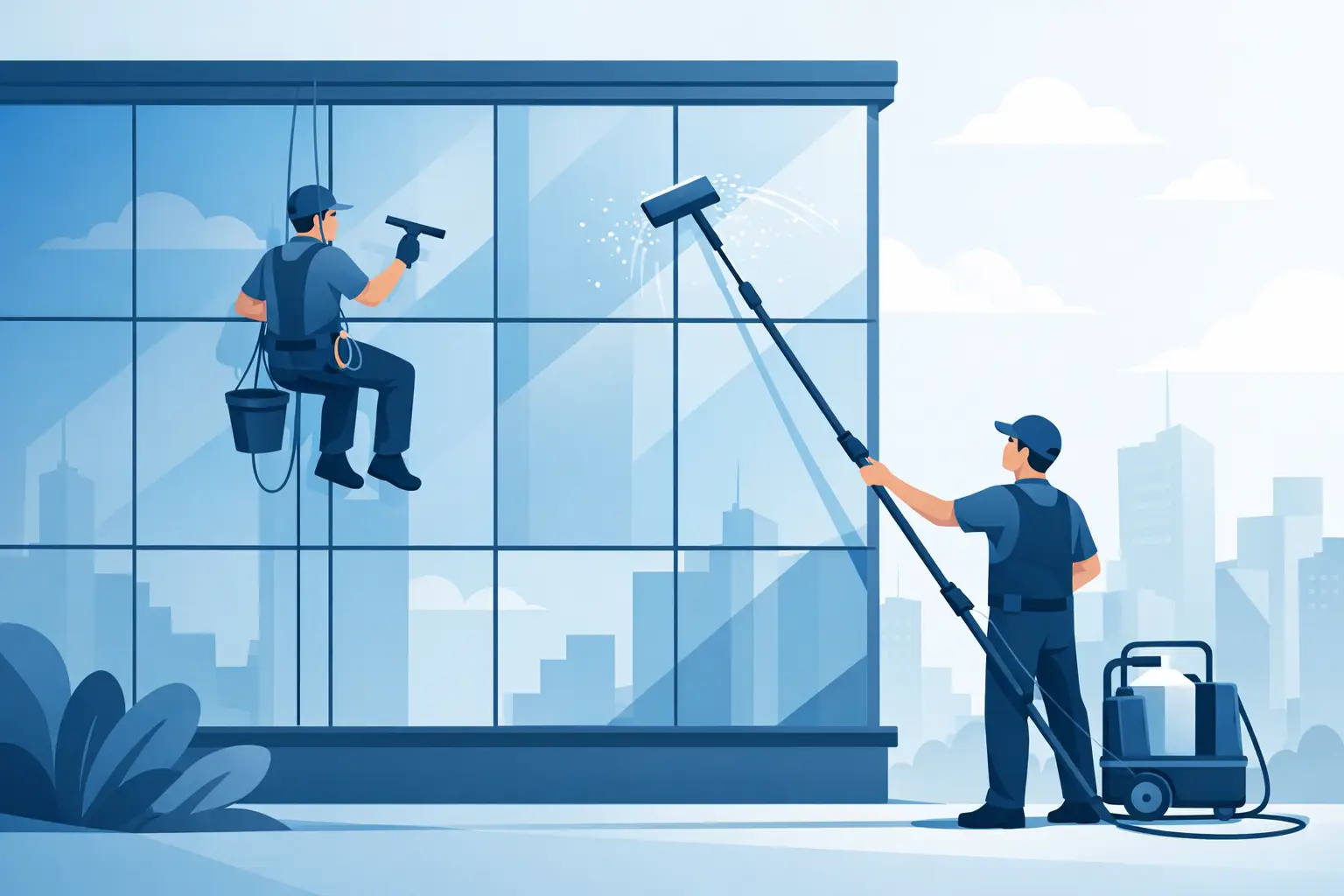
If you have ever watched a window cleaning crew spend half the day setting up platforms, blocking access, and working around tenants or customers, you already know the real cost of traditional access methods. Window cleaning without scaffolding is not just a different way to reach glass – it is a smarter way to protect people, reduce disruption, and get the job done faster.
For homeowners, that can mean no heavy equipment parked across the driveway and no technicians climbing around steep rooflines. For commercial properties, it can mean fewer obstacles at entrances, less noise during business hours, and less liability tied to elevated work. The biggest shift is simple: access no longer has to be the most difficult part of the project.
Why window cleaning without scaffolding is gaining ground
Scaffolding has been the standard answer for hard-to-reach windows for a long time, but standard does not always mean efficient. Setting it up takes time. Moving it across a site takes time. Coordinating around landscaping, walkways, storefronts, parking, and occupied spaces takes even more time.
That setup burden changes the economics of the job. A window cleaning project is no longer just about cleaning glass. It becomes a staging operation, a safety management exercise, and in many cases a disruption to the people using the property.
Window cleaning without scaffolding removes much of that friction. Instead of building temporary structures to reach upper glass, newer methods use specialized equipment and remote-access systems to clean elevated surfaces with far less jobsite impact. That matters on single-family homes with difficult architecture, and it matters even more on multi-story commercial properties where downtime and public access are real concerns.
The biggest advantage is safety
When most property owners compare cleaning methods, they start with cost. That makes sense, but safety should come first because it affects every other part of the job. The more a project depends on workers operating from height on ladders, lifts, or scaffold systems, the more planning, exposure, and risk management it requires.
Reducing that exposure is one of the clearest benefits of modern exterior cleaning. If technicians can clean elevated windows without spending extended time on scaffold platforms, the overall risk profile improves. Fewer moving parts on the ground also means fewer chances for damage to landscaping, parked vehicles, entryways, and surrounding surfaces.
For commercial clients, this is often a liability question as much as a cleaning question. Facility managers and property owners are not just hiring for results. They are hiring for a process that protects tenants, pedestrians, staff, and the building itself.
Speed matters more than most people expect
A lot of cleaning delays have nothing to do with the glass. They come from mobilization, access setup, repositioning equipment, and breaking everything down at the end of the day. That is why projects that seem straightforward on paper can stretch longer than expected.
Window cleaning without scaffolding shortens that timeline because crews can focus more on cleaning and less on building access systems around the building. On residential jobs, that often means less interruption to the household. On commercial jobs, it can mean maintaining a more normal flow for customers, tenants, employees, and deliveries.
That speed advantage is especially valuable when the property needs recurring service. Retail storefronts, office buildings, hospitality properties, apartment communities, and managed residential buildings do not just need clean windows once. They need a repeatable process that does not turn every service visit into a construction zone.
What modern non-scaffold window cleaning looks like
There is no single method behind every project. The right approach depends on building height, glass condition, access points, surrounding obstacles, and whether the property is residential or commercial. In some cases, water-fed pole systems can handle upper-story glass efficiently. In others, rope access or lift alternatives may still be necessary for specific sections.
The most advanced option is drone-assisted exterior cleaning, which is changing how high-reach maintenance gets done. Instead of relying on scaffolding to bring people up to the window line, drone technology brings controlled cleaning capability to the surface directly. That creates a very different jobsite footprint and a very different experience for the customer.
For buildings with hard-to-reach elevations, limited staging space, privacy concerns, or a need to minimize disruption, drone-assisted service can be the strongest fit. It is not a gimmick and it is not about replacing judgment with automation. It is about using better tools to solve an old access problem with more precision and less risk.
Where it works best
Residential properties with tall façades, awkward rooflines, delicate landscaping, or limited ladder placement can benefit immediately from non-scaffold cleaning methods. Homeowners often want the result without the stress of workers navigating difficult exterior angles around the home.
On the commercial side, the value is even more obvious. Office buildings, retail centers, mixed-use properties, schools, medical buildings, hotels, and multi-unit residential complexes all face the same challenge: windows need regular care, but traditional access methods can interfere with the people inside and around the property.
That does not mean every building should be cleaned the same way. Some low-rise properties may still be served well by conventional tools. But when height, access, safety, speed, or disruption become major factors, the case for window cleaning without scaffolding gets much stronger.
What property owners should ask before hiring
The right provider should be able to explain more than how they clean. They should explain how they access the glass, how they protect the site, and how they adapt the plan to your building. If the answer starts and ends with equipment, that is not enough.
Ask how the method affects resident privacy, business operations, pedestrian flow, and turnaround time. Ask whether the approach reduces risk compared with ladders, lifts, or scaffold staging. Ask what surfaces can be cleaned safely and what limitations need to be considered.
That last point matters because every method has trade-offs. Some heavily soiled windows may need a different treatment than routine maintenance cleaning. Certain mineral deposits or post-construction issues may require specialized restoration rather than standard washing. A good provider will say so clearly instead of promising the same process for every type of glass and every kind of buildup.
Why the process feels different on site
Customers usually notice the difference right away. There is less noise, less equipment crowding the property, and less sense that the cleaning job has taken over the day. That matters more than it may sound.
For a homeowner, a less invasive setup simply feels easier. For a storefront, it helps preserve curb appeal while the work is happening. For a facility manager, it can reduce the coordination headaches that come with redirecting foot traffic, managing access, or warning occupants about major exterior equipment.
This is one reason forward-looking companies like Aerial Assault Exterior Washing are investing in drone-assisted service. The goal is not just to clean windows. It is to modernize the entire maintenance experience around safety, speed, and precision.
The long-term value goes beyond clean glass
Clean windows improve appearance, natural light, and first impressions. That part is obvious. What is easier to miss is the operational value of choosing a method that is faster, safer, and easier to repeat over time.
When service becomes easier to schedule and less disruptive to perform, properties are more likely to stay on a consistent maintenance cycle. That helps protect presentation standards for businesses and preserves exterior condition for homes. It also reduces the temptation to delay service because the setup feels too inconvenient.
The best cleaning method is not always the one people used ten years ago. It is the one that fits the building, lowers unnecessary risk, and delivers visible results without turning routine maintenance into a major project.
If your property has difficult access, active foot traffic, privacy concerns, or upper-story glass that has always been a hassle to maintain, this is the right time to rethink the old approach. Cleaner windows are the goal, but a safer and more efficient process is what really changes the experience.